
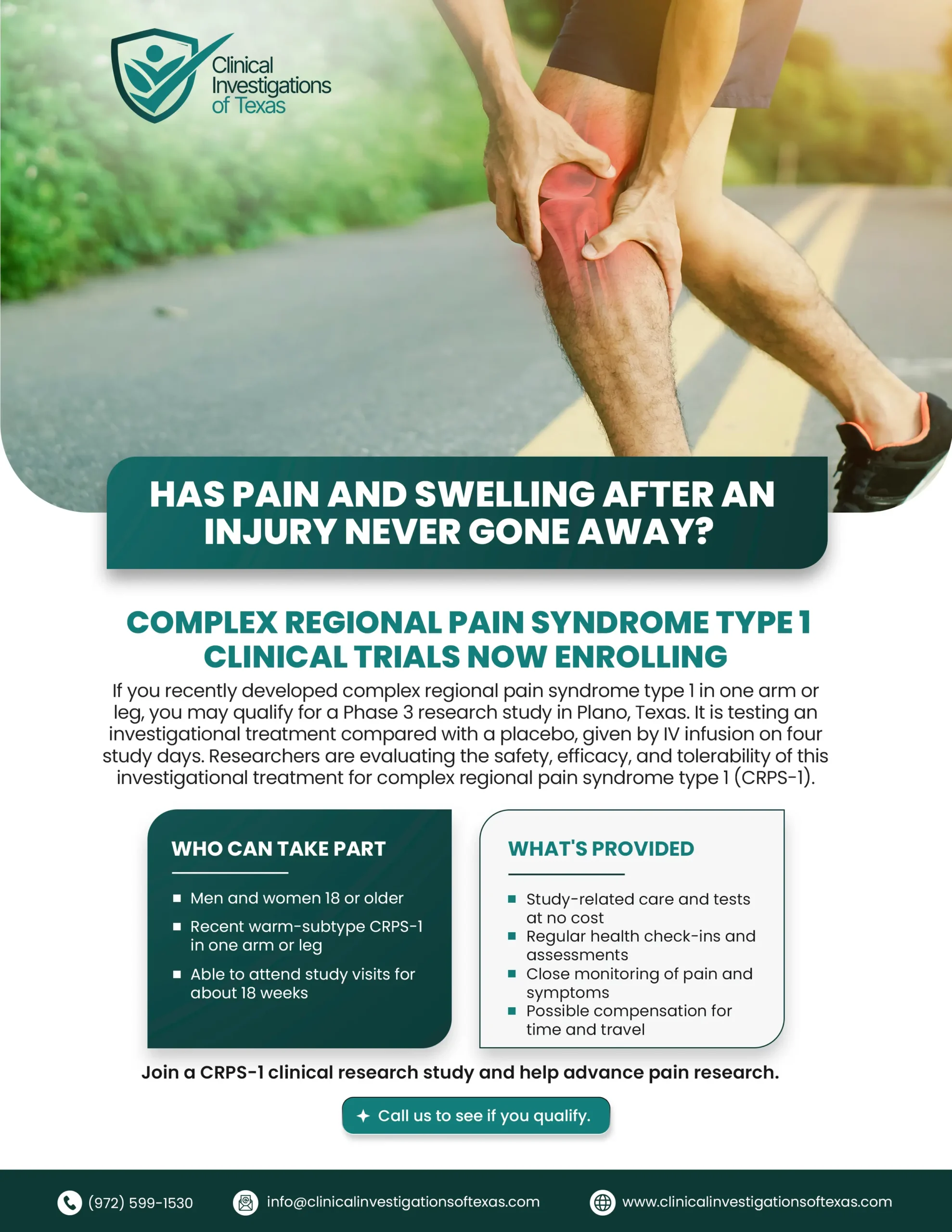
A Phase 3 clinical research study is looking at an investigational treatment for complex regional pain syndrome type 1 in adults who have recently developed the condition in one arm or leg.
About Study
Complex Regional Pain Syndrome Type 1 Clinical Trials



About the Condition
Understanding CRPS-1
Living with complex regional pain syndrome type 1 (CRPS-1) can be difficult. This condition can affect an arm or leg after an injury or another event that doesn’t directly involve nerve damage. It may cause ongoing pain, swelling, changes in skin color or temperature, and increased sensitivity in the affected limb. Even simple activities, such as walking, getting dressed, or using your hand, can start to feel like a challenge.
Because CRPS-1 can affect each person differently and symptoms may persist over time, these complex regional pain syndrome research studies are exploring potential new approaches to better understand how this condition can be managed.
"*" indicates required fields
Study overview
Exploring Potential New Approaches to Pain Management Through CRPS Type 1 Clinical Trials
This Phase 3 complex regional pain syndrome type 1 clinical trial in Richardson, Texas, is evaluating an investigational treatment in adults with the warm subtype of CRPS-1. Researchers want to learn whether the treatment may help with CRPS-1 pain compared with a placebo, and will also look at its safety and tolerability.
During this clinical study, participants are randomly assigned to receive either the investigational treatment or placebo by IV infusion on Day 1, Day 4, Day 7, and Day 10. The research team will closely monitor your health and check in on your pain, CRPS-1 symptoms, physical function, and overall well-being. Participation is voluntary and lasts approximately 18 weeks, including screening, treatment, and follow-up.
Participant benefits
- Study-related care at no cost
- Regular health check-ins and assessments
- Compensation for time and travel may be available


