
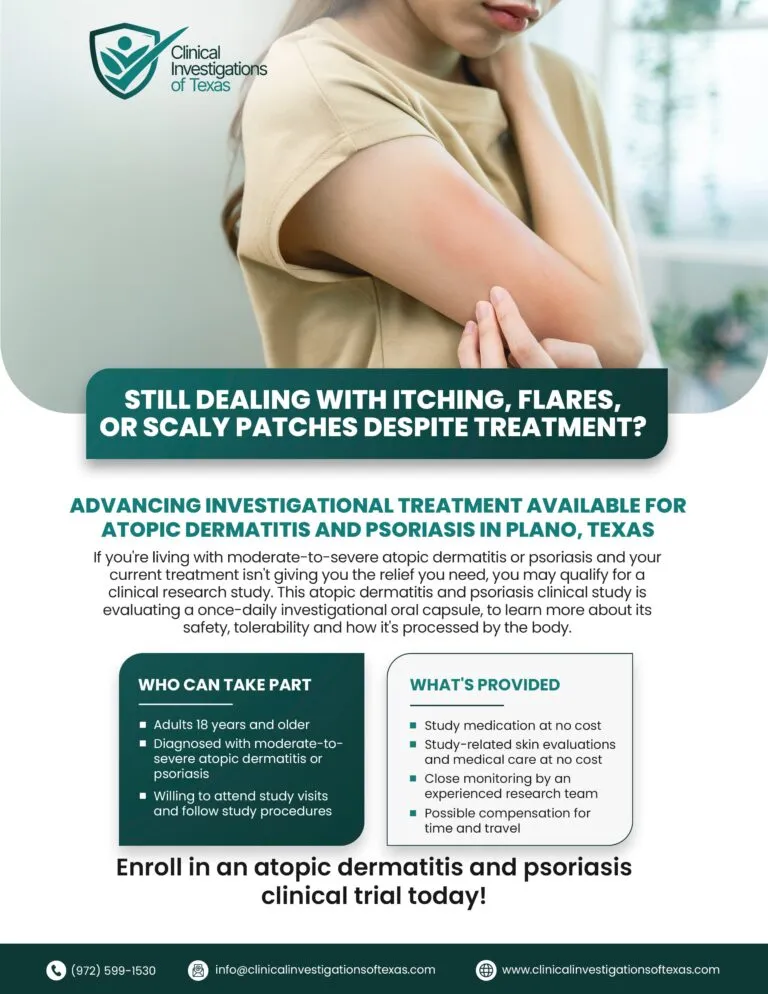
A Phase 1b, randomized, double-blind trial is evaluating a once-daily oral capsule, in adults with moderate-to-severe atopic dermatitis or psoriasis. Join our atopic dermatitis and psoriasis clinical trial in Richardson, Texas.
About Study
Investigational Treatment for Atopic Dermatitis and Psoriasis



About the Condition
Advancing Skin Disease Care Through
Atopic Dermatitis and Psoriasis Clinical Trials
Atopic dermatitis and psoriasis are two of the most common chronic inflammatory skin conditions, and both can take a real toll on daily life. Atopic dermatitis causes dry, intensely itchy skin that can crack, weep or become infected, while psoriasis produces thick, scaly patches that are often painful and slow to heal. Both conditions come from an overactive immune response, though the pathways differ.
For many people, moderate-to-severe disease means living with visible symptoms, disrupted sleep, and treatments that only partly help. Left inadequately treated, it can also take a toll on mental health, with many patients reporting higher rates of anxiety and social withdrawal.
"*" indicates required fields
Study overview
What To Expect When You Enroll in Atopic Dermatitis Clinical Trials
Ready to enroll in an atopic dermatitis and psoriasis clinical trial? You may qualify if you’re 18 or older with moderate-to-severe atopic dermatitis or psoriasis that hasn’t fully responded to your current treatment.
This is a Phase 1b, randomized, double-blind, placebo-controlled study testing LPX-TI641, an investigational oral capsule taken once daily for 28 days. Our team will review your health history, explain every step, and answer your questions, with no pressure to join.
Participant benefits
- Study-related care and skin evaluations at no cost to you
- Study medication provided at no cost
- Close monitoring by an experienced research team
- Possible compensation for time and travel


